Bitly is a mature, widely integrated platform for short links, QR codes, campaign tracking, and landing pages. For many marketing teams, it is the default.
Yohn.io solves a related problem with a different pricing shape: one-time links and QR codes for a few durable assets, a flat Standard plan for ongoing branded-link management, a Team plan that includes digital business cards, and a self-hosted option when the company needs to own the infrastructure.
The useful question is not “Which platform has more features?” It is: if you are considering this Bitly plan, what would you get with Yohn instead?
The short answer
Bitly is a strong choice when your company is already standardized on its marketing ecosystem. Its pricing ladder, though, adds restrictions at each step: ads and a Bitly-owned URL on Free, a paid bit.ly hostname on Core, a custom domain only once you reach Growth, and a large jump to Premium for advanced analytics.
Yohn often avoids that ladder:
- A few professional links or QR codes: €10 one-time
- Ongoing branded link management: Standard at $29/month
- About 10 digital business cards: Team at $290/year, with link and QR capabilities included at no additional cost
- Infrastructure and data control: Enterprise / self-hosted
If those economics, URL ownership, or digital cards matter more than Bitly’s campaign suite, Yohn is usually the better buy. If your workflows already depend on Bitly’s integrations and reporting, Bitly may still be the better fit.
| Bitly plan | Bitly price | Main limitation | Yohn alternative | Yohn price |
|---|---|---|---|---|
| Free | $0 | Ads + bit.ly URL |
One-time yohn.click |
€10 once |
| Core | $10/mo, annual only | Still bit.ly; no own domain |
One-time links or Standard | €10 once / $29 mo |
| Growth | $35/mo ($348/year) | 500 links, 10 QR/month | Standard | $29/mo ($290/year) |
| Premium | $199/mo annually | Large price jump | Standard | $29/mo |
| Growth + ~10 digital cards | $348/year | Web-based cards, no Wallet cards | Team | $290/year |
| Enterprise | Custom | Hosted SaaS | Enterprise/self-hosted | Custom |
Bitly Free vs Yohn’s €10 one-time option
Bitly Free costs $0. As of August 2026, Bitly’s pricing page lists 5 links and 2 QR codes per month, with no click-and-scan data history. Bitly’s support documentation also states that free accounts show an interstitial page with a destination preview and an advertisement before the visitor reaches your URL.
That is usually unacceptable for branded or customer-facing assets: a printed QR code, a sales email, packaging, or a badge should not open a third-party ad page.
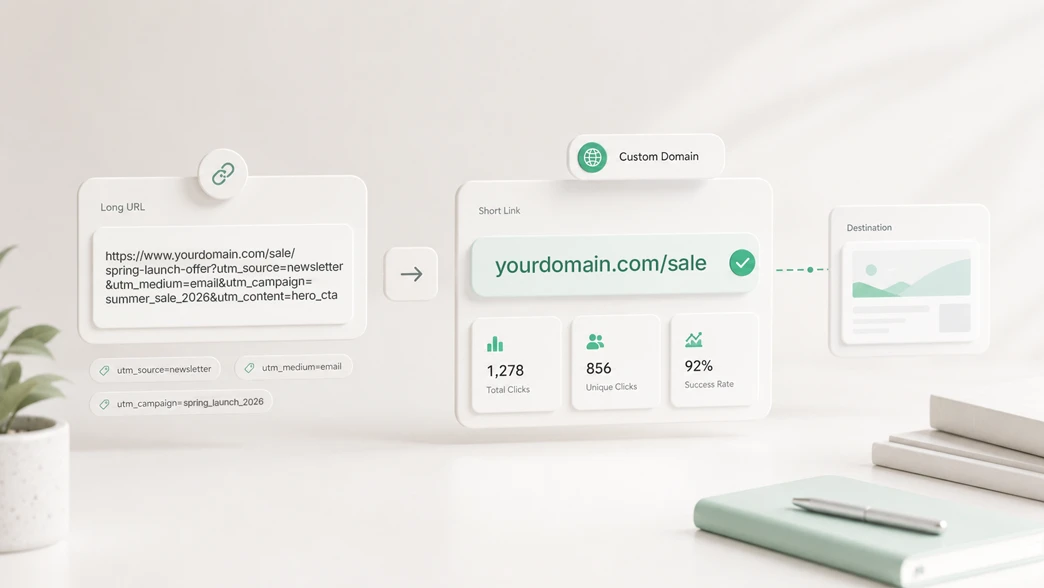
Yohn’s comparison point is not another “free” shortener. It is a €10 one-time yohn.click shortlink / dynamic QR: a direct, ad-free redirect and no subscription. For a small number of professional links, paying €10 once is often a better business decision than a $0 link that inserts advertising in front of your customer.
See Yohn’s dynamic QR codes for the one-time, editable-redirect model.
Bitly Core vs Yohn
Core is Bitly’s first paid plan: $10/month billed annually ($120/year), annual commitment only. It removes the free-plan ad interstitial and adds click and scan data (30 days), redirects, UTM tools, and higher monthly limits (100 links and 5 QR codes).
It still does not include a custom domain. Links and QR codes remain bit.ly/... addresses in a hostname Bitly controls. If you print that URL on packaging, signage, or a business card, you cannot later move the same bit.ly path to another provider.
For a few durable links or QR codes, compare Core’s recurring $120/year with Yohn’s one-time pricing. You keep an ad-free redirect without paying every year for a hostname you do not own.
If you need an ongoing workspace — unlimited branded links, editable QR codes, and analytics — skip Core and compare Yohn Standard instead. Core is a paid plan that still leaves printed assets on Bitly’s namespace.
Bitly Growth vs Yohn Standard
This is the closest like-for-like comparison.
Bitly Growth is $35/month, or $348/year with annual billing. Yohn’s Standard URL Shortener is $29/month, or $290/year. The direct comparison is $35 versus $29 monthly, and $348 versus $290 annually.
Growth is the first Bitly plan that includes a complimentary custom domain and branded links. Limits are 500 links and 10 QR codes per month, with 4 months of click and scan data. Standard includes unlimited branded links, dynamic QR codes, your own domains, link analytics, file sharing, and link management.
Both plans can use a company-owned short domain. The practical differences are volume, packaging, and what you are paying the extra money for:
| Bitly Growth | Yohn Standard | |
|---|---|---|
| Monthly price | $35 | $29 |
| Annual price | $348/year | $290/year |
| Domain | Complimentary custom domain | Connect your own domains; complimentary .click domain on the annual package |
| Links / QR codes | 500 links and 10 QR codes per month | Unlimited branded links and dynamic QR codes |
| Analytics | 4 months of click and scan data; country-level tracking | Link analytics for clicks, locations (including city-level), devices, and campaigns |
| Extra | Bitly Pages, bulk creation, campaign-oriented reporting | File sharing from your domain and centralized link management |
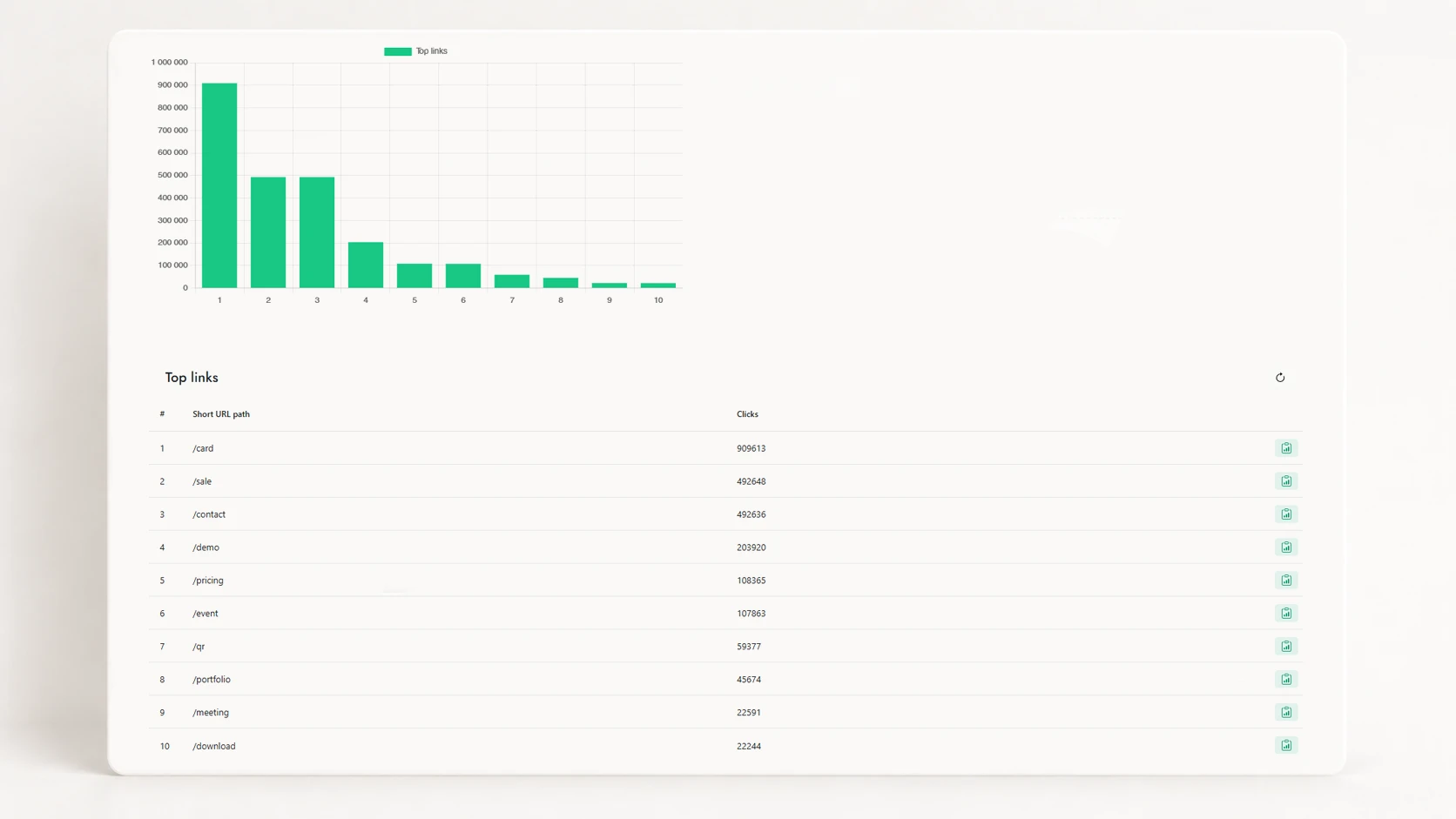
Do not treat city-level tracking as a Bitly-only advantage. Bitly’s public matrix reserves city-level and device-type click data for Premium. Yohn includes city-level tracking without that jump.
Bitly’s genuine advantage at this tier is the mature marketing and campaign ecosystem: integrations, Pages, packaged reporting, and workflows many teams already run inside Bitly. If that ecosystem is the product you need, Growth can be worth the annual commitment. If you mainly need branded links, QR redirects, and clear analytics on a domain you control, Standard is the closer match at a simpler price.
Bitly Premium vs Yohn
Bitly Premium is $199/month billed annually ($2,388/year), or $300/month on monthly billing. The jump buys volume (3,000 links and 200 QR codes per month), 1 year of data history, custom campaign-level tracking, city-level and device-type data, and mobile deep linking.
Ask which of those items you actually need. City-level tracking and campaign-oriented analytics are the features most often used to justify Premium. Yohn already provides city-level tracking and link analytics on Standard, at $29/month rather than $199/month.
Bitly still has a real advantage when a team depends on Bitly-specific campaign objects, deep-linking, or a reporting workflow that is already built around Bitly. That is an ecosystem advantage, not a reason to assume every Premium feature is missing from a lower-priced alternative.
If the buying question is “Do we need $199/month to see where clicks come from?”, the answer is usually no.
Need digital business cards as well?
Bitly can cover a basic digital-card workflow. Paid plans include Bitly Pages and virtual contact cards that can be shared by link or QR code, with downloadable contact information. That is a web/vCard solution, not an Apple Wallet or Google Wallet card.
Yohn’s digital business cards are built for the networking moment: Apple Wallet, Google Wallet, an HTML card page, and vCard saving, with optional lead capture.

Yohn Team is $290/year for 10 digital business cards. Link-management and QR functionality are included at no additional cost with that commitment.
For a company that already needs about 10 cards, the relevant question is why keep a separate Bitly subscription at all. Bitly Growth billed annually is about $348/year for up to 10 web-based digital business cards plus links and QR codes, but without Apple Wallet or Google Wallet cards. Yohn Team is $290/year for 10 cards including Apple Wallet and Google Wallet, with branded-link and QR capabilities included at no additional cost.
Individual card plans still exist if you do not need a team workspace: Online Business Card at $10/year, or the Wallet Card Bundle at $29/year.
Enterprise: hosted SaaS vs customer-controlled infrastructure
Bitly Enterprise is a conventional hosted SaaS offering: custom volume, permissions, SSO, uptime commitments, and a customer-success layer. Bitly stores data in the United States. Its public pricing lists enterprise security and permissions; it does not advertise customer-selected hosting regions.
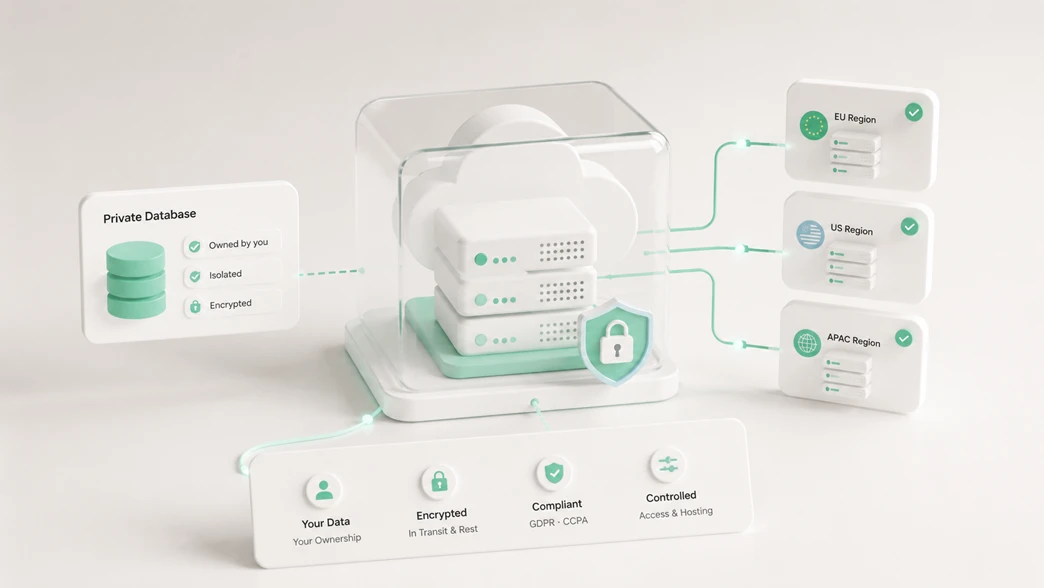
Yohn Enterprise can run as a private, self-hosted deployment in the customer’s own AWS account. Employee contact data, vCards, and leads can stay inside infrastructure the company controls. Customers can also choose the AWS region, including Germany, the United States, Brazil, the UAE, and others.
Region selection can support an internal residency policy and deployment reviews related to frameworks such as GDPR, PDPL, and DIFC Data Protection Law No. 5 of 2020. It does not, by itself, establish compliance. Roles, purpose limitation, security, data-subject rights, and transfer mechanisms still apply.
This is the right comparison when legal, security, or IT asks who hosts employee and lead data — not when the only requirement is a familiar multi-user SaaS admin console.
The overlooked question: who owns the URL?
For printed QR codes, this often matters more than a feature checklist.
A bit.ly/... URL belongs to Bitly’s namespace. Even if it keeps redirecting after a downgrade, the company cannot migrate that exact URL to another provider. The printed asset is permanently coupled to Bitly.
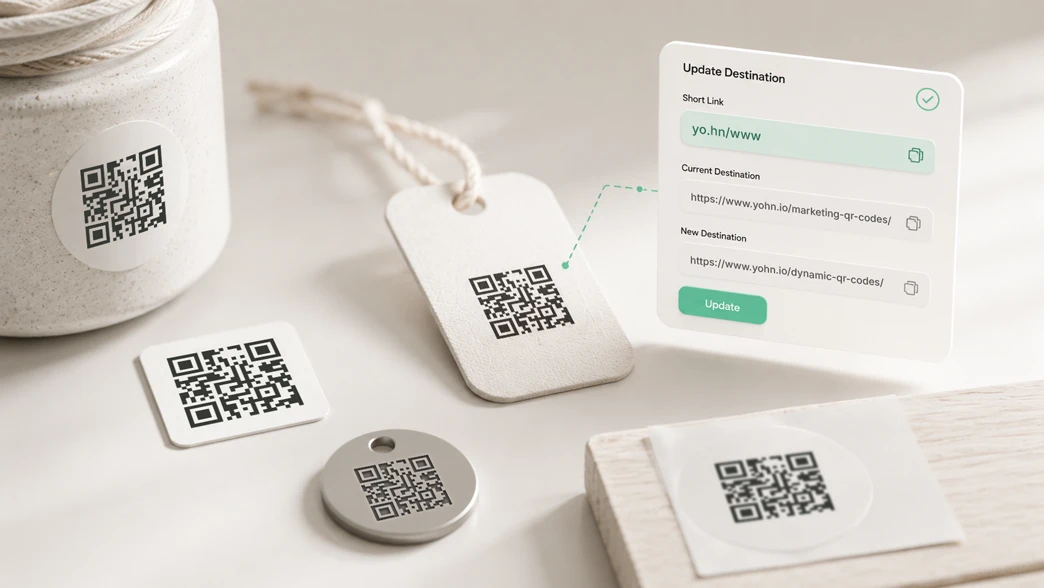
With a company-owned short domain, DNS stays with the company. You can change the destination, change the vendor, or move the same hostname. That is the difference between renting a redirect and owning the address printed on packaging, signs, badges, labels, business cards, or engraving.
Yohn’s branded URL shortener and dynamic QR codes are built around that ownership model. Bitly can also use a custom domain — starting at Growth. Below that tier, every physical scan still points at a Bitly-owned hostname.
Where Bitly genuinely wins

Bitly is the better fit when:
- The organization is already standardized on Bitly, with existing links, processes, and training
- Teams depend on Bitly’s integrations, API surface, or enterprise marketing ecosystem
- Campaign objects, Pages, and Bitly-specific reporting are part of how marketing already works
- High-volume collaboration, permissions, and a familiar SaaS admin model matter more than URL ownership or digital cards
Those are real reasons to stay. The article is not “Yohn wins because we say so.” Bitly wins when the product you need is Bitly’s marketing platform, not a generic shortener.
How to decide

| Need | Practical choice |
|---|---|
| Only a few professional links or QR codes | Yohn one-time option (€10 for a yohn.click shortlink / dynamic QR) |
| Ongoing branded link and QR management | Yohn Standard at $29/month |
| About 10 digital business cards as well | Yohn Team at $290/year; link and QR functionality included at no additional cost |
| Enterprise infrastructure and data control | Yohn Enterprise / self-hosted |
| Already deeply invested in Bitly’s marketing ecosystem | Bitly may still make sense |
The recurring pattern is Bitly’s upgrade ladder:
Free → ads + Bitly-owned URL Core → paid, but still a Bitly-owned URL Growth → own domain, at a higher monthly price or an annual commitment Premium → a major price jump for advanced analytics and campaign features
versus Yohn:
Few links → €10 one-time Many links → $29/month Standard Need business cards → $290/year Team, with link and QR capabilities included Enterprise → self-host and choose the infrastructure
If your team is asking which platform has the largest campaign dashboard, Bitly may be the answer. If the question is which option avoids paying more to remove ads, own the printed URL, add wallet cards, or keep data on your infrastructure, Yohn is built for that decision.
Start with Yohn’s branded URL shortener, create dynamic QR codes, or see digital business cards for teams.
All product names and trademarks belong to their respective owners. Pricing and feature availability may change; this comparison reflects publicly available Bitly pricing and Yohn product information as of August 2026.